
Spirit Europe
50 years ago, in 1975, at the age of 12, I started pole vaulting and jumped with PACER fiberglass poles.
In February 1985, I met Steve Chappell, the boss of PACER, for the first time at Madison Square Garden in New York during the US Indoor Championships.
I finished 3rd with 5.70m behind Vasily and Sergey BUBKA and ahead of all the best Americans.
In April 1988, Steve Chappell came to see me in SAN DIEGO where I was training with my Swedish friend Miro Zalar. I tested his new SPIRIT poles… and adopted them immediately; I finished 5th at the Seoul 88 Olympics with 5.70m.
In January 1989, I co-founded the company MATSPORT with a friend (Patrick Gellens, decathlete – 7942pts) to distribute UCS/SPIRIT poles in France, followed by all UCS athletics equipment.
In 1989, I broke the French record for the first time with 5.92m, then a second time in February 1990 with 5.94m.
I ended my international career in 1994.
In 2002, MATSPORT stopped selling anything but poles and, for several years already, had specialized in the world of TIMING and TRAINING.
I became the sole owner of the company, and we then built our new offices at « 38330 Saint-Ismier », near Grenoble.
Following the sale of the TRAINING department in 2020, MATSPORT now focuses exclusively on the timing equipment sales market and the provision of timing, data, and TV graphics services in France and internationally.
In 2023, I created the company SPIRIT EUROPE to best distribute to and serve all pole vaulters and their coaches in France, as well as in certain countries in Europe, North Africa, and the Middle East.
With the help and support of Steve, Lane, and Chris Chappell and the entire UCS/SPIRIT team, we offer the largest selection of poles, the biggest stock, and the best possible service in our region of the world.
So, see you soon, whether by phone, email, Instagram, WhatsApp, Messenger, video, or simply at a stadium right next to a pole vault pit.
Philippe
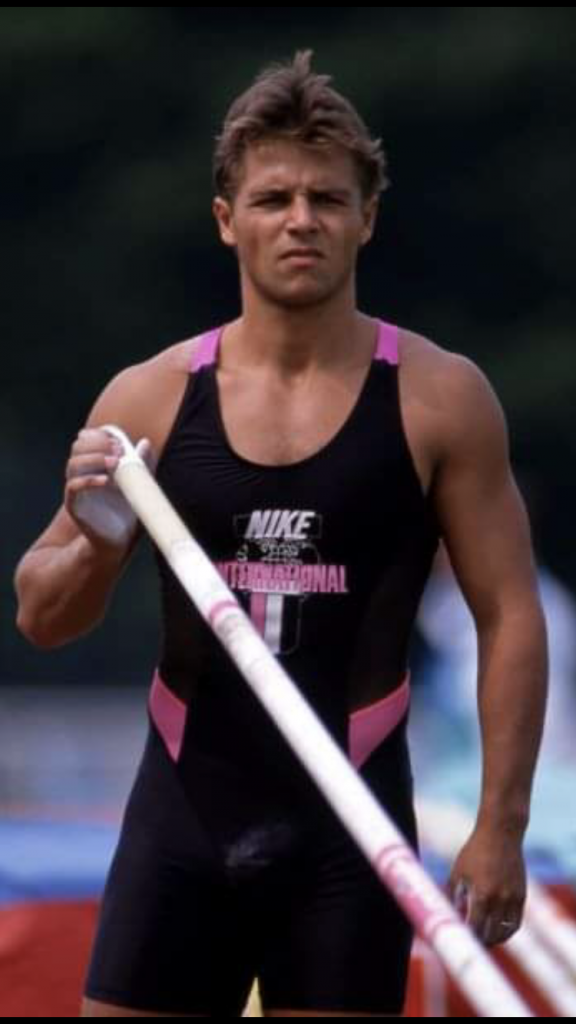
The pole vault, a family story.
Philippe. Jacques, the father. Mathieu and Thibaut, the sons.






Mondo Duplantis
2x OLYMPIC CHAMPION – WR from 6.17 m to 6.31 m
“Why Spirit poles?
I’ve been jumping with them since I was a child; the statistics don’t lie: without any doubt, Spirit makes the BEST POLES for world records.”
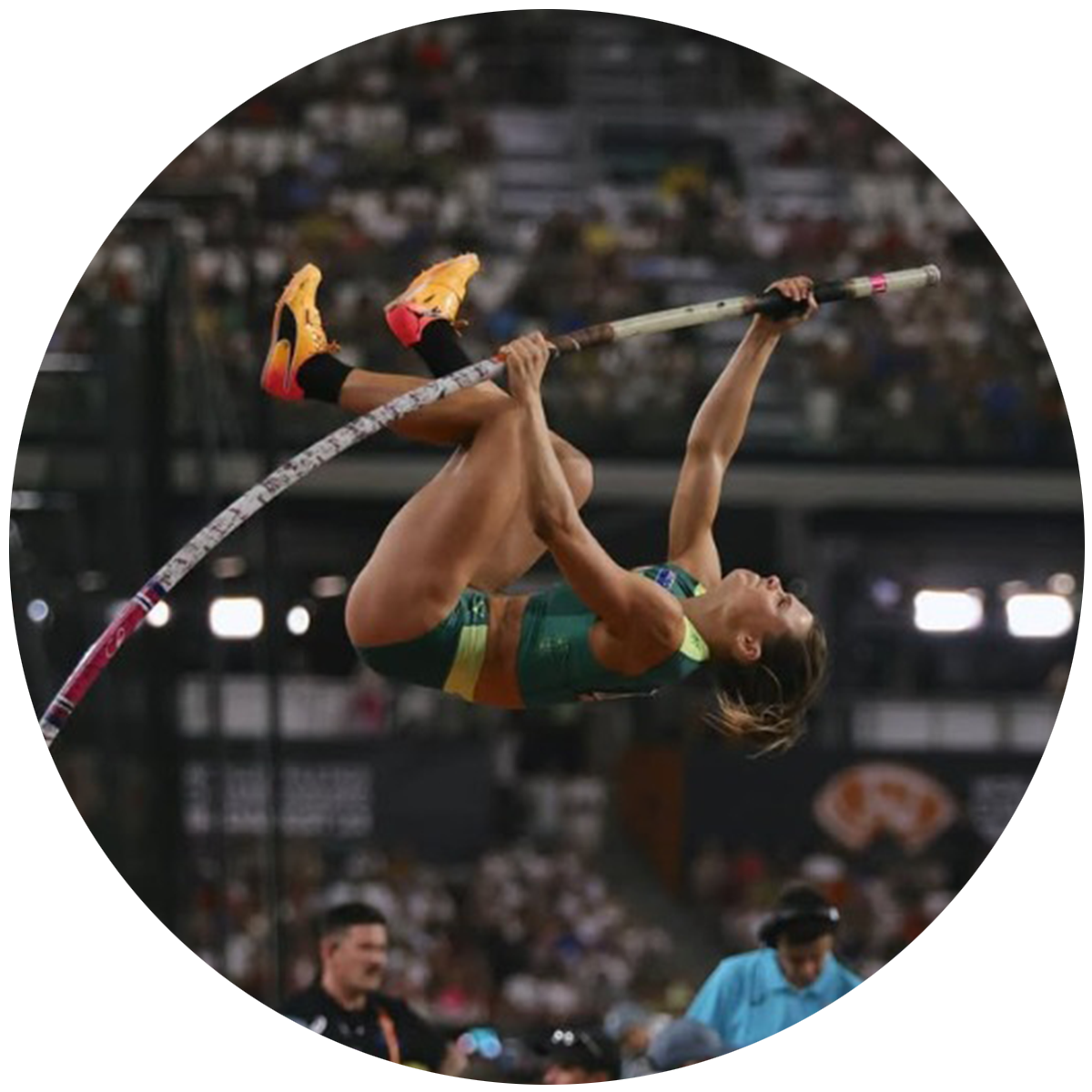
Nina Kennedy
5.91m - OLYMPIC CHAMPION - WORLD CHAMPION
“I have never used any other brand of poles, and I have no desire to.
Funny anecdote: I’ve never broken one while jumping… and I love my Spirit poles <3 “

Renaud Lavillenie
OLYMPIC CHAMPION – WR 6.16 m
“Since the age of 7, my first jumps were with Spirit poles.
Since then, I’ve had the opportunity to try other brands as I progressed, but the verdict has always been the same: my best jumps were with Spirit.
After more than 30 years, they remain the most reliable and easiest to master, and allow for great performances when everything goes well, whether for a world record or an Olympic jump.
But they also know how to limit errors, which still allows you to achieve a good jump — and that’s no small feat! For me, it’s obvious: it will be SPIRIT FOREVER!”
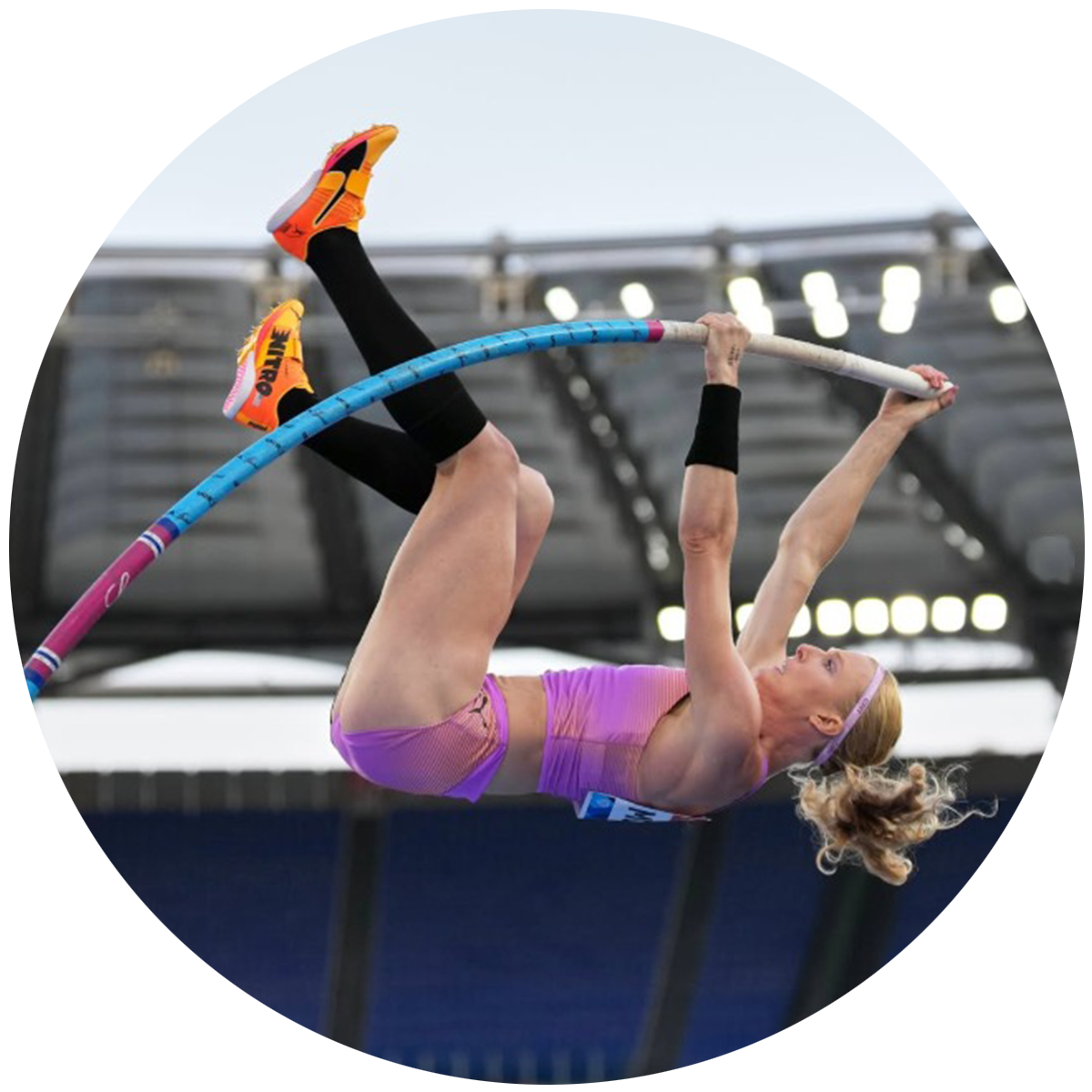
Sandi Morris
5.00m - 2x WORLD CHAMPION - OLYMPIC VICE-CHAMPION
“I’ve been jumping with SPIRIT since I started. I’ve never been apprehensive about switching to a harder pole because I know in advance that the transition will be smooth and precise. I love the energy they give me. SPIRIT is simply the best compromise between reliability and efficiency.”

Manolo Karalis
6.17 m – 3x WORLD VICE-CHAMPION (indoor / outdoor)
“Why Spirit poles?
Because they are very stable and they allow you to correct errors during the jump, while still clearing the bar even if you make a mistake. Simply the best insurance to FLY HIGH.”
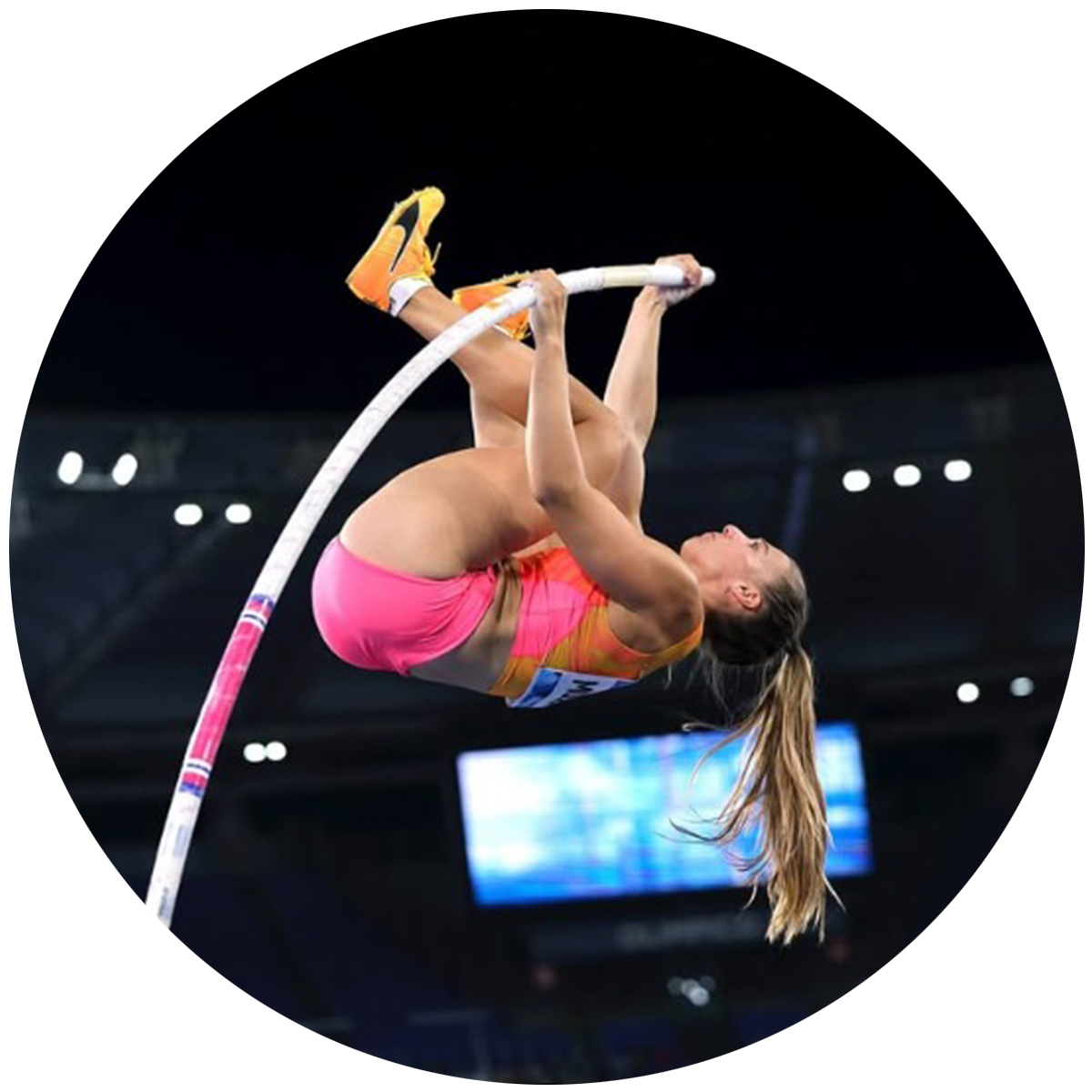
Angelica Moser
4.88m - 3x EUROPEAN CHAMPION
“I’ve been using SPIRITs right from the start and they’ve been with me throughout my progression. What I like most is the reliability and when I jump with them I feel safe and ready to go even higher.“
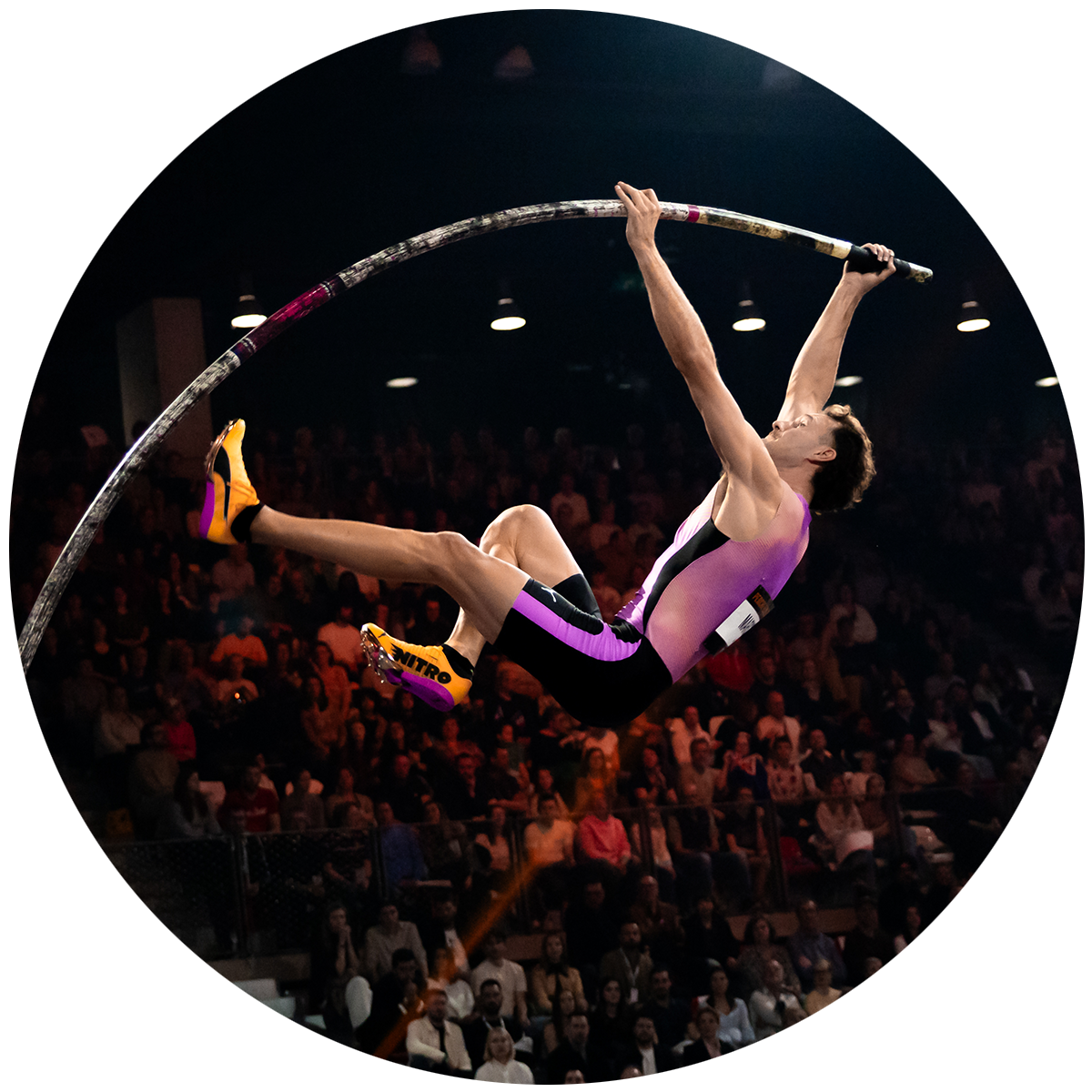
Kurtis Marschall
6.00 m – 3x WORLD BRONZE MEDALIST (indoor / outdoor)
“They reward good technique, but they are also forgiving. I take care of them as if they were my soulmate, and I trust them with my life. When you ask a child to draw a pole vault pole, they draw one with a pink sticker in the middle.
Same thing as for Ferrari: ask a child to draw a racing car, they draw it in red. …SPIRIT, the FERRARI of pole vault poles.”

UCS Spirit
Since 1987, UCS/SPIRIT has been manufacturing the highest-performing poles in the world.
Designed and manufactured to be the most durable and consistent vaulting poles on the market, UCS/Spirit poles offer the ability to optimize the performance of any technical model.

Steve Chappell
Managing Director and Co-founder of UCS/Spirit
Steve grew up in Amersham, England. Like any child with an older brother, he dreamed of following in the footsteps of his pole-vaulting brother, who was four years older.
His first steps in pole vaulting were in the garden, wearing shorts and using a bamboo pole. In sixth grade, he joined his first official team and began competing. In his very first competition, he cleared 1.98m (6 feet 6 inches) on aluminum poles.
Steve continued to progress throughout high school and eventually joined the British national team in his senior year. That same year, he had the opportunity to compete against the reigning world record holder during a meet against East Germany.
Setting a new personal best and a British National Junior record at 4.71m (15 feet 5 7/16 inches), Steve won the competition.
He continued his vaulting career at Loughborough University and then competed for a club after his studies. After meeting his future wife, Debbie, Steve decided to move to the United States to dedicate himself to pole vaulting. Shortly after his arrival, he was hired by AMF Pacer.
At AMF Pacer in Carson City, Nevada, Steve worked alongside Herb Jenks (inventor of composite material vaulting poles, fiberglass) and George Moore (CEO of AMF Pacer and founder of Pacer), learning all the ins and outs of pole production and business management.
After several years as Managing Director of AMF Pacer, Steve found himself in a difficult situation when Pacer was bought and moved to Illinois.
Along with Lane Maestretti, he partnered with athletics equipment manufacturer UCS to create a new pole vault pole manufacturing company: UCS/SPIRIT.
Lane Maestretti grew up in a small rural town in northern Nevada. He discovered pole vaulting in 5th grade when a friend’s older brother, who practiced the sport, let him try it. Immediately hooked, Lane participated in a middle school competition that same year and cleared 2.29m at the age of 10. He continued pole vaulting throughout high school, winning two state titles and setting a personal best of 4.60m.
After high school, Lane joined the decathlon team at the University of Nevada, Reno.
During his time at UNR, he finished second in the decathlon and won two conference titles in the pole vault.
After his studies, he continued competing, qualifying for three US national teams and two Olympic trials. He also held the American decathlon record for the pole vault with a jump of 5.29m (17 feet 3 inches). His best decathlon score is 7891 points.
During the summer of 1981, Lane discovered pole manufacturing through a seasonal job offered by George Moore at AMF Pacer in Carson City, Nevada.
It was there, alongside composite materials expert Herb Jenks and the rest of the Pacer team, that Lane learned all the inner workings of pole production and the sporting goods manufacturing industry.
By 1984, Lane had become an essential member of the company. When Pacer was sold and moved to Illinois, Lane decided to stay in Nevada and, with Steve Chappell and the help of UCS Inc., they founded UCS/SPIRIT.

Lane Maestretti
Production Director and Co-founder of UCS/SPIRIT
A little history...
Pole vaulting is an athletics event in which the vaulter uses a long, flexible fiberglass pole to jump over a bar.
Pole vault competitions were organized by the Greeks, Cretans, and Celts of antiquity. Men’s pole vault has been an Olympic discipline since 1896. Women’s pole vault made its appearance at the Olympic Games in 2000.
For millennia, wooden poles were used to cross natural obstacles, waterways, and marshy areas all over the earth. For centuries throughout Europe, stacks of poles were kept in houses to allow people to cross canals and streams without getting wet. Venetian gondoliers traditionally used their poles to jump from their boats to the shore.
History describes one of the first pole vault competitions taking place at the Ulverston Football and Cricket Club in Cumbria in 1843. Modern competitions began around 1850 in Germany, and modern pole vault techniques were apparently developed in the United States at the end of the 19th century.
The first competitive vaulting poles were initially made of solid ash. As the heights reached increased, bamboo poles gave way in the 1940s to tubular aluminum poles, tapered at each end.
In the late 1950s, improvements allowed for the manufacture of flexible poles made of composite materials, specifically fiberglass. These poles allow vaulters to reach even greater heights.
A good vaulter must demonstrate not only speed, agility, and strength, but also excellent technical skills.
Today, athletes participate in the pole vault, one of the four jumping events in athletics.
The properties of a pole can be modified by adjusting the position of the grip relative to its end. The gap between the hands is generally shoulder-width apart. Poles are designed for all levels of practice and all body types, with lengths ranging from 2.50m to 5.30m and various weight capacities.